Keeping yourself in check
Keep Yourself in Check: A MAN v FAT Guide to Self-Health
Let’s be honest. Most men don’t check in on their own health as often as they should. We shrug off aches, ignore lumps, and hope things will just sort themselves out. The truth is, staying on top of your health is one of the smartest moves you can make. Catching problems early gives you the best chance of fixing them, keeping you fighting fit, and letting you enjoy life without unnecessary worry.
This guide will give you everything you need to do a proper monthly self-check, keep tabs on your lifestyle, and look after your mental and physical health.
Know Your Body
The first step is to get familiar with your own body. Nobody knows it better than you. Spending a few minutes each month checking yourself can make a huge difference. It does not take long, and it is better than stressing out later if something is off.
Areas to Focus On
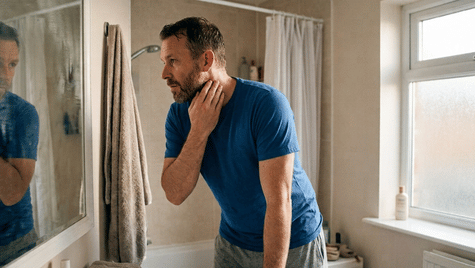
Neck and lymph nodes
Feel around your neck, under your jaw, and in your armpits for any lumps or swelling. Swollen lymph nodes can sometimes be a sign of infection or other health issues. Don’t panic if they feel slightly tender – just get to know what is normal for you.
Chest
Yes, men have breast tissue too, and yes, it is possible to get breast cancer, even if it is rare. Check for:
- Lumps or swelling
- Changes in size or shape
- Sores or ulcers
- Any liquid from the nipples, which may contain blood
Use the pads of your fingers to press gently, then more firmly, to feel all of your chest tissue. Lift your arms and check under your armpits as well. A quick glance in the mirror can help you notice changes in size, dimpling, or rippling of the skin.
Abdomen
Run your hands over your stomach and sides, feeling for any unusual lumps or swelling. It is not about being hyper-aware, it is about knowing what is normal for you.
Testicles
Check your testicles in a warm shower or bath when the scrotum is relaxed. Use both hands to roll each testicle gently between thumb and fingers. Look for:
- Lumps or bumps
- Changes in size or heaviness
- Anything that feels firmer than normal
Learn to feel the epididymis, the soft tube at the back of each testicle. Do not mistake it for a lump. If it becomes swollen or painful, it could be epididymitis, which is treatable with antibiotics.
Remember, consistency matters. Pick a day each month and make it a habit. Little and often is better than forgetting entirely.
For more detailed guidance on early detection and self-checks, visit American Cancer Society or Prostate Cancer Foundation.
Skin and Moles
Your skin can tell you a lot about your health. Check your moles with the ABCDE method:
- A – Asymmetry: Are both sides the same?
- B – Border: Is the edge irregular?
- C – Color: Are there multiple colors or unusual spots?
- D – Diameter: Has it grown in size?
- E – Evolving: Has it changed over time?
Also watch out for new spots, bleeding, crusting, or itching. A quick trip to the Primary Care Physician for anything unusual could make a huge difference. Remember, early detection is key.
Oral Health
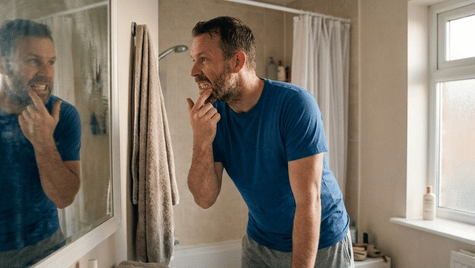
How often do you actually look at your gums? Next time you brush your teeth, take a closer look. Healthy gums should be pink, firm, and not bleed. Watch for:
- Red or inflamed areas
- Swelling between teeth
- Bleeding while brushing or eating hard foods
- Pale gums, which could indicate blood or kidney problems
Good oral health is about more than just fresh breath. Your gums and teeth affect your overall wellbeing, so keep them in check.
Mental Health
Health is not just physical. Take stock of your mood and mental state regularly. Ask yourself:
- Have I felt unusually low or anxious over the past one to two weeks?
- Am I sleeping poorly or feeling constantly tired?
- Am I stressed, irritable, or struggling to focus?
Tracking your mood is simple. Make a note on your phone or on paper each day. Awareness is the first step to action.
Lifestyle affects mental health too. Good sleep, proper nutrition, regular exercise, and social connection make a big difference. If you notice persistent changes or struggles, reach out for support.
Support services include:
- National Institutes of Health: for mental health advice
- Samaritans USA: Call the Samaritans branch in your area or 1 (800) 273-TALK.
- Your MAN v FAT Coach or teammates: for peer motivation and encouragement
Lifestyle Check
Take a moment to look at the bigger picture. Ask yourself:
- Am I getting enough movement and exercise? Even small amounts count.
- Is my diet balanced with plenty of protein, vegetables, and fiber?
- How much alcohol am I drinking, and do I smoke?
- Am I sleeping well, and is it restorative?
Small, steady improvements in your habits are far more effective than drastic changes you cannot maintain.
Sexual Health
Since you are checking your testicles, remember to keep an eye on your sexual health.
- Get regular sexual health checks if you are at risk
- Always use protection
- Be aware of STIs and treat them promptly
For more information and local testing services, search online for your local sexual health clinic.
Making It a Habit
The most important thing is consistency. Make your self-check part of a routine:
- Choose a day each month for your full body scan
- Do checks in the shower or bath
- Track skin, mood, and lifestyle on your phone or a notebook
Pro tip: Updating your health check on your member dashboard allows you to monitor changes over time. You can spot trends, track improvements, and share insights with your coach if needed.
Keep Fighting Fit
Self-checks are not about paranoia. They are about awareness, prevention, and staying in control. Know your body, watch your habits, and make small, practical tweaks to improve your health.
If you notice anything unusual, contact your Primary Care Physician. Early detection can save lives. For mental health support, reach out to one of the services listed above.
Little and often is the key. Check your body, check your lifestyle, and keep yourself fighting fit.